|
Emergency
Cardiac Care Committee Richard E. Kerber, MD, Chair Joseph P. Ornato,
MD, Vice Chair Donald D. Brown, MD Leon Chameides, MD Nisha Chibber
Chandra, MD Richard 0 Cummins, MD, MPH Mary Fran Hazins MSN, RN
Richard J. Melker, MD, Ph.D. W. Douglas Weaver, MD
Organizations
Endorsing the 1992 ECC Guidelines American Academy of Pediatrics
American College of Emergency Physicians American Red Cross European
Resuscitation Council Heart and Stroke Foundation of Canada National
Heart, Lung, and Blood Institute
HYPOTHERMIA
Severe accidental hypothermia (body temperature
below 30° C (86° F]) is associated with marked depression of cerebral
blood flow and oxygen requirement, reduced cardiac output, and decreased
arterial pressure. Victims can appear to be clinically dead because
of marked depression of brain and cardiovascular function, but full
resuscitation with intact neurological recovery is possible, although
unusual. The victim's peripheral pulses and respiratory efforts
may be difficult to detect, but lifesaving procedures should not
be with held based on clinical presentation.
Basic
Life Support
If the victim is not breathing, rescue breathing
should be initiated. Cardiopulmonary resuscitation (CPR) in the
pulse-less patient should be begun immediately, although pulse and
respirations may need to be checked for longer periods to detect
minimal cardiopulmonary efforts. The traditional recommendation
that pulse and respiration's be checked for 1 to 2 minutes before
beginning CPR is probably excessive. A span of 30 to 45 seconds
should be adequate to confirm pulselessness or profound bradycardia,
for which CPR would be required. It is important to prevent further
heat loss from the patient's body core by removing wet garments
from the victim, insulating the victim, shielding him or her from
wind, and ventilating with warm, humidified oxygen. For victims
not in cardiac arrest with temperatures of 30° C to 34° C (86° F
to 93° F), apply external warming devices to truncal areas only
(warm packs to neck, armpits, and groin). After stabilization, cautiously
ready the patient for transport to a hospital. Treatment of severe
hypothermia (temperature less than 30° C (86° F) in the field remains
controversial. Many providers do not have the equipment or time
to adequately assess core body temperature or to institute rewarming
with warm, humidified oxygen or warm fluids, although these methods
should be initiated when available to help prevent temperature afterdrop.
(For equipment see: www.hypothermia-ca.com) Cardiac monitoring and
intravenous access should be rapidly established if possible, and
core temperature should be determined in the field with either tympanic
membrane sensors or rectal probes, but none of these should delay
transfer. Airway management and transportation should be undertaken
as gently as possible to avoid precipitating ventricular fibrillation
(VF). The patient should be moved in the horizontal position to
avoid aggravating hypotension through orthostatic mechanisms. If
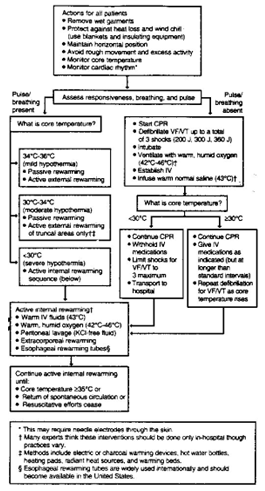
the hypothermic victim is in cardiac arrest, the treatment algorithm
in Fig 2 should be followed. If VF is detected, emergency personnel
should deliver three shocks to determine fibrillation responsiveness.
If VF persists after three shocks, further shocks should be avoided
until after rewarming to above 30° C (86° F). CPR, rewarming, and
rapid transport should immediately follow the three defibrillation
attempts. If core temperature is below 30° C (86° F), successful
defibrillation may not be possible until rewarming is accomplished.
Figure below presents a recommended hypothermia treatment algorithm,
with recommended actions that should be taken for all possible victims
of hypothermia.
Algorithm
for treatment of hypothermia.
|
|
Advanced
Cardiac Life Support
In the hypothermic victim who has not yet
developed cardiac arrest, many physical manipulations (including
endotracheal or nasogastric intubation, temporary pacemaker, or
pulmonary artery catheter insertion) have been reported to precipitate
VF. However, when specifically and urgently indicated, such procedures
should not be withheld. In a prospective multicenter study of hypothermia
victims, careful endotracheal intubation did not result in a single
incident of VF. Endotracheal intubation to provide effective ventilation
with warm, humidified oxygen (see: www.hypothermia-ca.com/res-q-air.htm)
and to prevent aspiration should be performed in the unconscious
hypothermic patient with inadequate ventilation. In such cases,
prior ventilation with 100% oxygen via bag-valve mask is recommended.
Conscious victims who are cold with only mild symptoms of hypothermia
may be rewarmed with external active and passive rewarming techniques
(e.g., warm packs, warmed sleeping bags, and warm baths). Management
of cardiac arrest due to hypothermia is quite different from management
of normothermic arrest. The hypothermic heart may be unresponsive
to cardioactive drugs, pacemaker stimulation, and defibrillation,
and drug metabolism is reduced. Administered medications, including
epinephrine, lidocaine, and procainamide, can accumulate to toxic
levels if used repeatedly in the severely hypothermic victim.
Active
core rewarming techniques are the primary therapeutic modality in
hypothermia victims in cardiac arrest or unconscious with a slow
heart rate. If the patient fails
to respond to initial defibrillation attempts or initial drug therapy,
subsequent defibrillation's or additional boluses of medication
should be avoided until the core temperature rises above 30° C (86°
F). Bradycardia may be physiological in severe hypothermia, and
cardiac pacing is usually not indicated unless bradycardia persists
after rewarming. The temperature at which defibrillation should
first be attempted and how often it should be tried in the severely
hypothermic patient have not been firmly established. There are
also conflicting reports about the efficacy of bretylium tosylate
in this setting, although it may prove helpful in VF by raising
the fibrillation threshold. Treatment of severely hypothermic victims
in cardiac arrest in the hospital setting should be directed at
rapid core rewarming. Techniques that can be used include the administration
of heated, humidified oxygen (42° C to 46° C (108.7 to 115° 'F),
warmed intravenous fluids (normal saline) at 43° C (109° F) infused
centrally at rates of approximately 150 to 200 mL/h (to avoid overhydration),
(see: www.hypothermia-ca.com/hot-sack 1.htm ) peritoneal lavage
with warmed (43° C [109° F]) potassium-free fluid administered 2
L at a time, or extracorporeal blood warming with partial bypass.
The use of esophageal rewarming tubes in the United States has not
yet been reported, although they have been used extensively in Europe.
Pleural lavage with warm saline instilled through a chest tube has
also been used successfully. The routine administration of steroids,
barbiturates, or antibiotics has not been documented to help increase
survival or decrease postresuscitative damage.
|