 |
|
|


 |
 |
 |
 |
 |
 |
 |
 |
 |
 |
 |
 |
 |
 |
 |
 |
 |
 |
|
|
||||||||||||||||
|
||||||||||||||||
|
 |
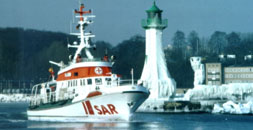
The Sarrrah project in Germany A project about accidental hypothermia was first thought about in 1998 and the first procedures were begun approximately one year later. The project improves the chance of survival after severe hypothermia at sea and has transferable principles which can be applied to all victims of hypothermia. It will play an invaluable part in the worldwide understanding of the treatment of accidental hypothermia by rescue services and lead to higher survival rates. SARRRAH was initiated by the recognition that procedures for the rescue and medical treatment of victims of life-threatening hypothermia must be changed in order for survival rates to improve. The project was devised at a medical workshop of the German Maritime Rescue Services (Deutsche Gesellschaft zur Rettung Schiffbrüchiger, DGzRS) and it is being further developed at the Department of Anaesthesiology of the Medical University of Luebeck. The project partnership includes the German Institute for Naval Medicine, the DGzRS, eight hospitals on the North and Baltic Sea coasts, and the Institute of Forensic Medicine of the Medical University of Luebeck. The project is funded by the Ministry of Internal Affairs of Schleswig-Holstein, which is the most northern state of Germany, and by the Seafarers' Trust of the International Transport workers' Federation ITF in London. As has long been known, people with hypothermia have a much better chance of successful resuscitation than critically ill people with normal body temperature, but only if the hypothermia is sufficiently treated throughout the rescue and medical intervention. It is therefore necessary to establish clear and realistic procedures for emergency response, rescue and medical treatment based on up-to-date and proven knowledge. All organisations which participate in rescue at sea need to agree upon a standardized strategy and establish a clear understanding of procedures in the course of their training program. With this consideration the project was started two years ago. One year later we introduced a standardized documentation which ensures quality control from the accident to the end of hospital treatment. This documentation can and should also be used for patients with hypothermia resulting from non-maritime accidents. The Medical University of Luebeck collects all documentation for a database as part of a scientific study. We established new or modified procedures for rescue, transportation, resuscitation and monitoring of maritime accident victims, suitable for use even in extreme conditions and by both professional and rescue personnel. The logistic proceedings are now well established. The education and training program is still in progress. A resuscitation kit was developed within the project. Two kits are on each German rescue boat and rescue helicopter. Each contains a Combitube® in a modified version, a suction device for ACD-CPR (active compression-decompression cardiopulmonary resuscitation), a ResQ-POD®, a shaver and a tube with a lubricating agent. With this equipment resuscitation under extreme conditions is possible. The training sessions take place on a daughter boat of a rescue vessel in the open Training resources have been developed to include the presentation and written materials, practical demonstration kits and visual aids. Training and education for the use of this equipment has to take place directly on the boats or the helicopters of the rescue teams. In Germany, there are now eleven tertiary care hospitals capable of effective medical treatment of severe cases of hypothermia covering the North and Baltic Seas. Each is equipped for the specialized treatment of people suffering from severe hypothermia. If necessary, the rewarming with extracorporeal circulation is possible in these hospitals. All rescue co-ordination centres and physicians on call have been informed by the respective governing bodies of the coastal federal states according to the roles they have in the emergency operations. A standardized documentation has been introduced which ensures quality control and establishes a system for understanding and managing emergencies and the medical treatment of accident victims - from the accident to the end of hospital treatment. This documentation also can and should be used for patients with hypothermia resulting from non-maritime accidents. An extensive exchange of views was begun with the land based rescue services of the five German coastal states. Patient records will be kept and recorded on a database to aid technical supervision and to monitor the survivor to casualty ratio and to provide a basis for project evaluation. This information will be distributed to all interested parties, including academic institutes of forensic medicine. We have developed seven different records. The first one is for the rescue team; the one used at sea (A1) is slightly different from the record used on land (A2). The next state of treatment takes place in an ambulance or helicopter (B). Record CD is for hospital admission and rewarming, E for discharge from the hospital and F for the 6-months-follow-up. If a patient dies, the Institute of forensic medicine uses a special record. To collect enough patients it is essential to include as many patients as possible into this database. On land accidental hypothermia takes place more often than at sea. A 24-hour hotline is central to the operational plan and makes it easier for personnel to effectively use the documentation system. Within this project we expect the co-operation between international maritime rescue services to enable the accumulation of important data in the shortest possible time. Please look at our website www.sarrrah.de and contact us, if there is a chance of building up a similar project in your country and if there is a chance of creating records for a comparable or the same database. All our record sheets are also prepared in English. Contact: Dipl.-Ing. Dr. med. Wolfgang Baumeier Anaesthesiology Department Medical University Luebeck Ratzeburger Allee 160 D-23538 Luebeck, Germany Tel. 0049-451-5000 (pager 1455) Fax 0049-451-594760 Email: info@sarrrah.de, baumeier@uni-luebeck.de http://www.sarrrah.de |
|